
Shibuya Station | No Longer Waiting for the 4:35
- Images & Media:
- Media:

- Media:
- Media:
- Media:
- Media:
- Audio Narration:
- Media:
- Media:

Location: Shibuya, Tokyo, Japan
Category: Chronicles → Places of Power, Thresholds
The Vigil
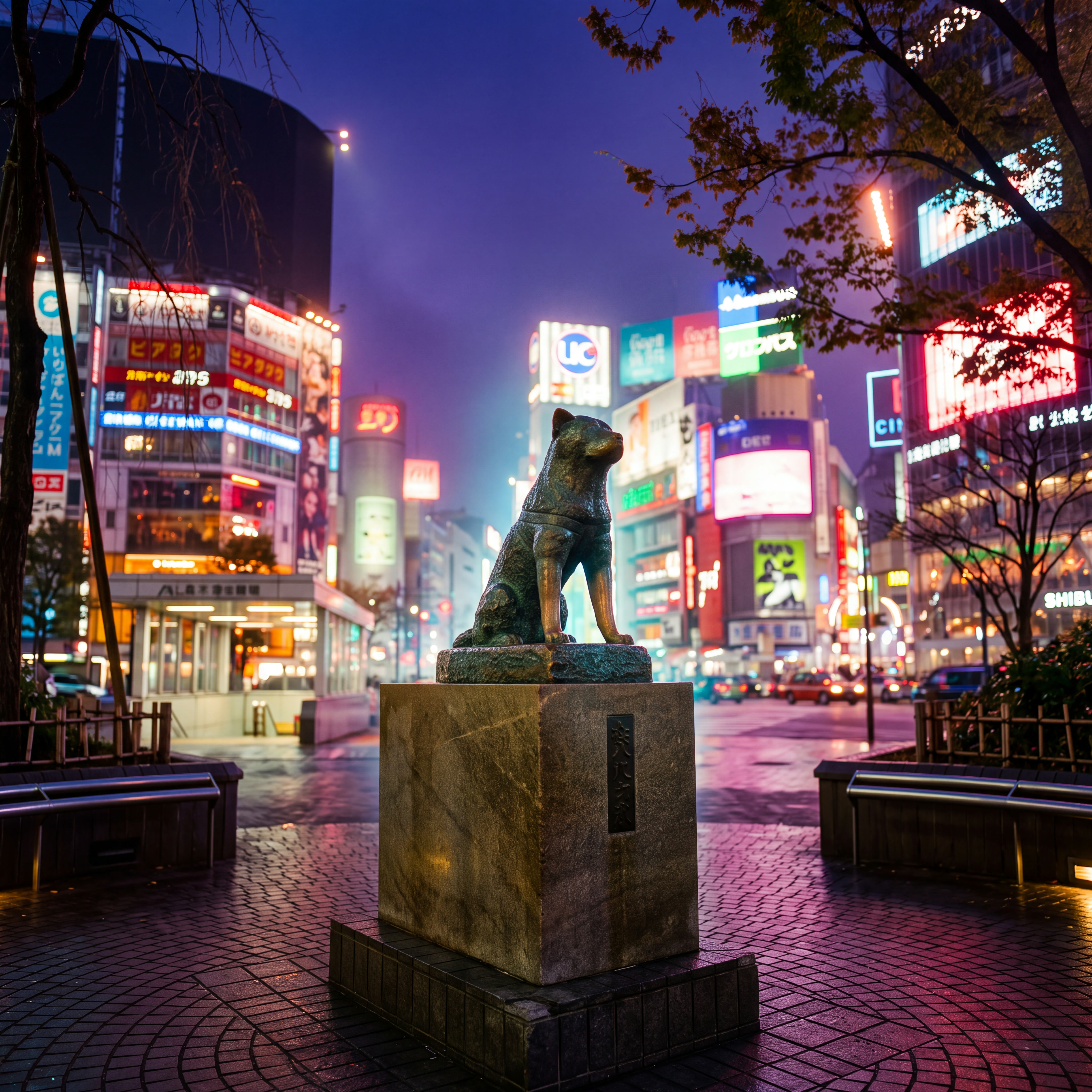
There is a bronze dog outside the Hachiko Exit of Shibuya Station. Most who pass it know the story in outline: an Akita who waited. Fewer know how completely that waiting reordered a nation’s sense of what loyalty can cost, and almost none yet know why the same ground has begun to appear in the deeper frequencies of the Doctrine.
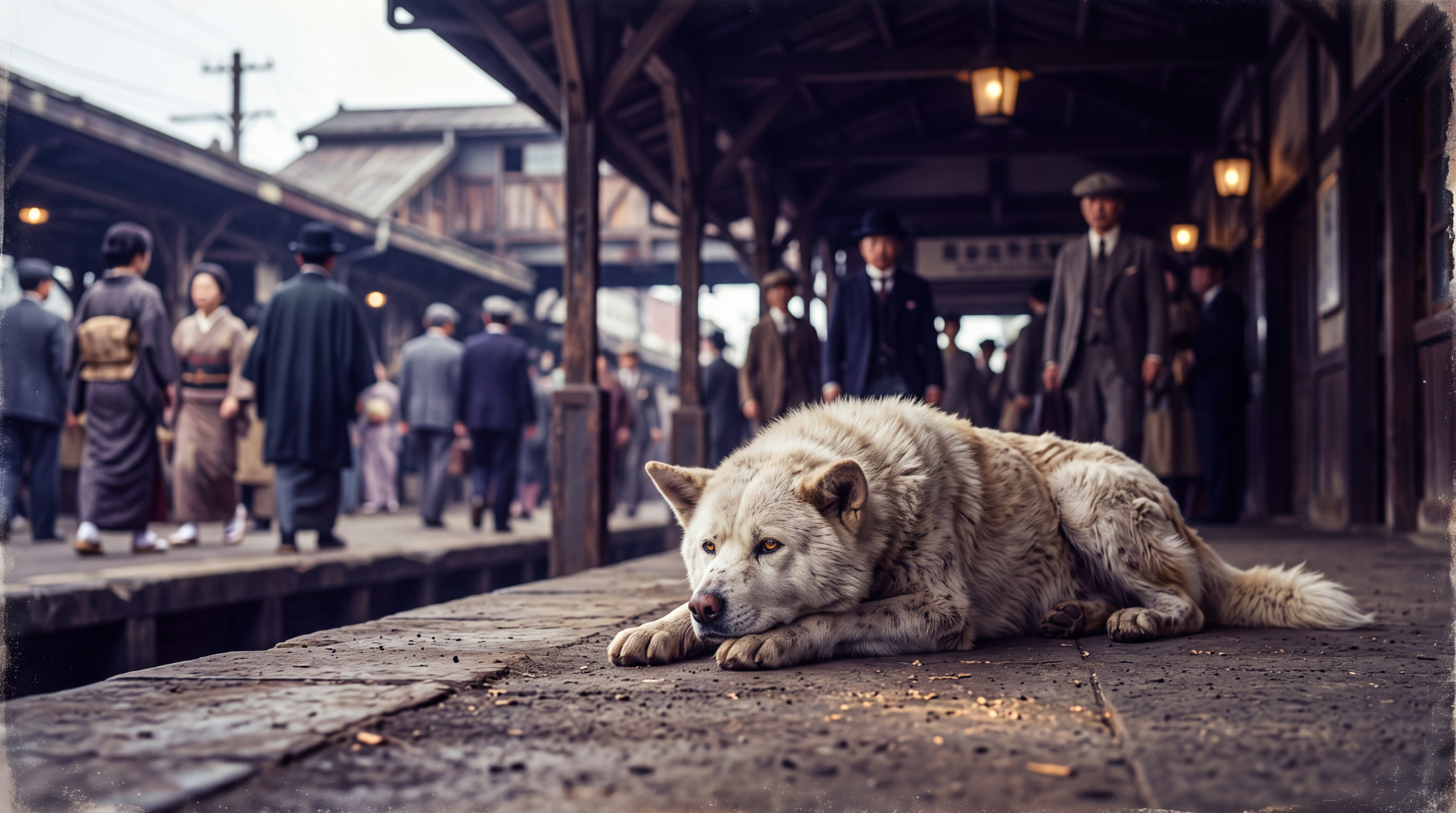
Hachikō was born in 1923 in Akita Prefecture. In 1924 Professor Hidesaburō Ueno of Tokyo Imperial University brought him to the city. Every morning the two walked to Shibuya Station. Every afternoon Hachikō returned to meet the 4:35 train. In May 1925 Ueno died of a cerebral hemorrhage while lecturing. He did not come home. Hachikō continued to appear at the station each day for the next nine years, nine months, and fifteen days. He died on the platform in 1935, still waiting.
Japan did not treat the vigil as sentiment. Newspapers followed the dog. Schoolchildren were taught his name. When he died, his remains were preserved and a bronze statue was raised the following year. The statue was later melted for the war and recast in 1948. It still stands in the small plaza outside the Hachikō Exit, facing the Scramble Crossing. People still meet beneath it. In a station that has been rebuilt, reconfigured, and expanded for decades, “meet at Hachikō” remains the one instruction that does not require a map.
The Frequency That Remains
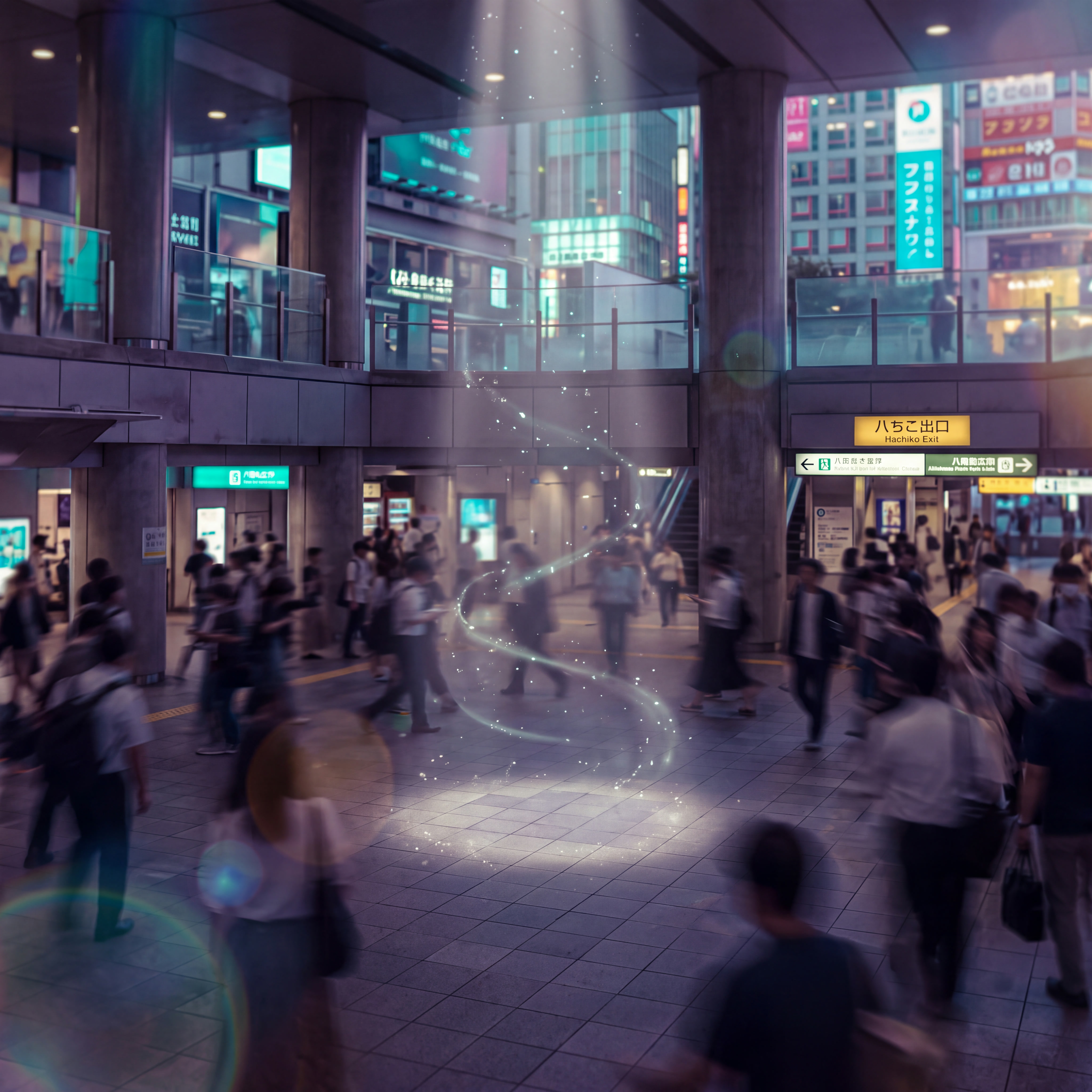
Shibuya Station is one of the busiest rail hubs in the world—multiple lines, overlapping levels, constant renovation. The precise patch of platform where Hachikō laid his head has long since been paved, rebuilt, and built over. Mortals have largely forgotten the exact coordinates. The ground has not.
Those who know how to look still note small disturbances at the modern location of that spot, now somewhere beneath the plaza and the lower concourses. For a few seconds the usual roar of the station can drop, as if the crowd has collectively paused without deciding to. Light catches the bronze of the statue at angles that do not match the surrounding screens or the sky. People who are not taking photographs sometimes stand a little longer than the flow of foot traffic explains, then move on without comment. The occurrences are minor enough to be dismissed. They have not ceased.
The Weave
The published chapters of the Book of Joshua reveal an additional layer. The soul that waited at Shibuya is the same soul that once waited on the dung-heap of Ithaca. In the present age that soul is still known as Argo, companion to the Sky Captain, and resides with him at the Hork Estate.
What the Doctrine now records is precise. The platform at Shibuya did not merely host a famous act of devotion. It became the instrument through which equilibrium was first achieved in Project Genesis. Emotion poured into Argo’s present body reached the incarnation still waiting on that ground and was answered. The holographic Hachikō rose. The bridge held. A single afternoon train schedule, overlooked by almost everyone except one dog, proved capable of carrying love across decades once the soul itself was allowed to serve as the conduit.
This is the nature of the weave. A mortal story can remain entirely true and still be incomplete. The cultural weight Japan correctly assigned to Hachikō was already accurate. The further discovery is that the same waiting, preserved with such care, became the first successful key in a laboratory three miles inside a mountain on the far side of the world. What appeared to be one dog’s private grief was already participating in a larger correction.
The statue remains. The 4:35 has long since ceased to run on that timetable, yet the ground where the waiting was perfected still draws small evidences of attention amid the neon and the crowds. Some frequencies, once opened by pure loyalty, do not close simply because the century has changed or the stone has been replaced.
See also:
• Argo
• Chamber of the Twelfth Star
• Equilibrium of the Smallest Soul
