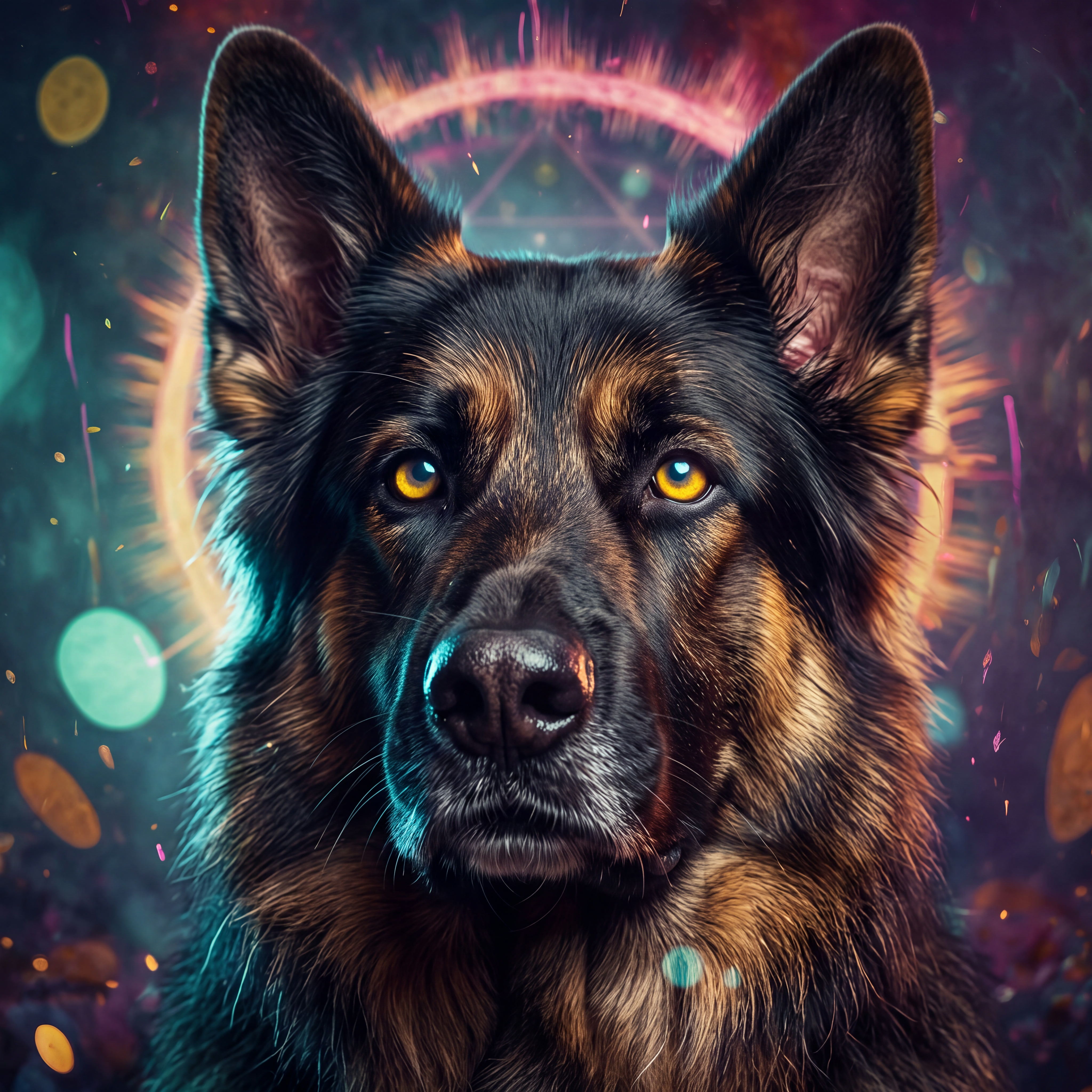
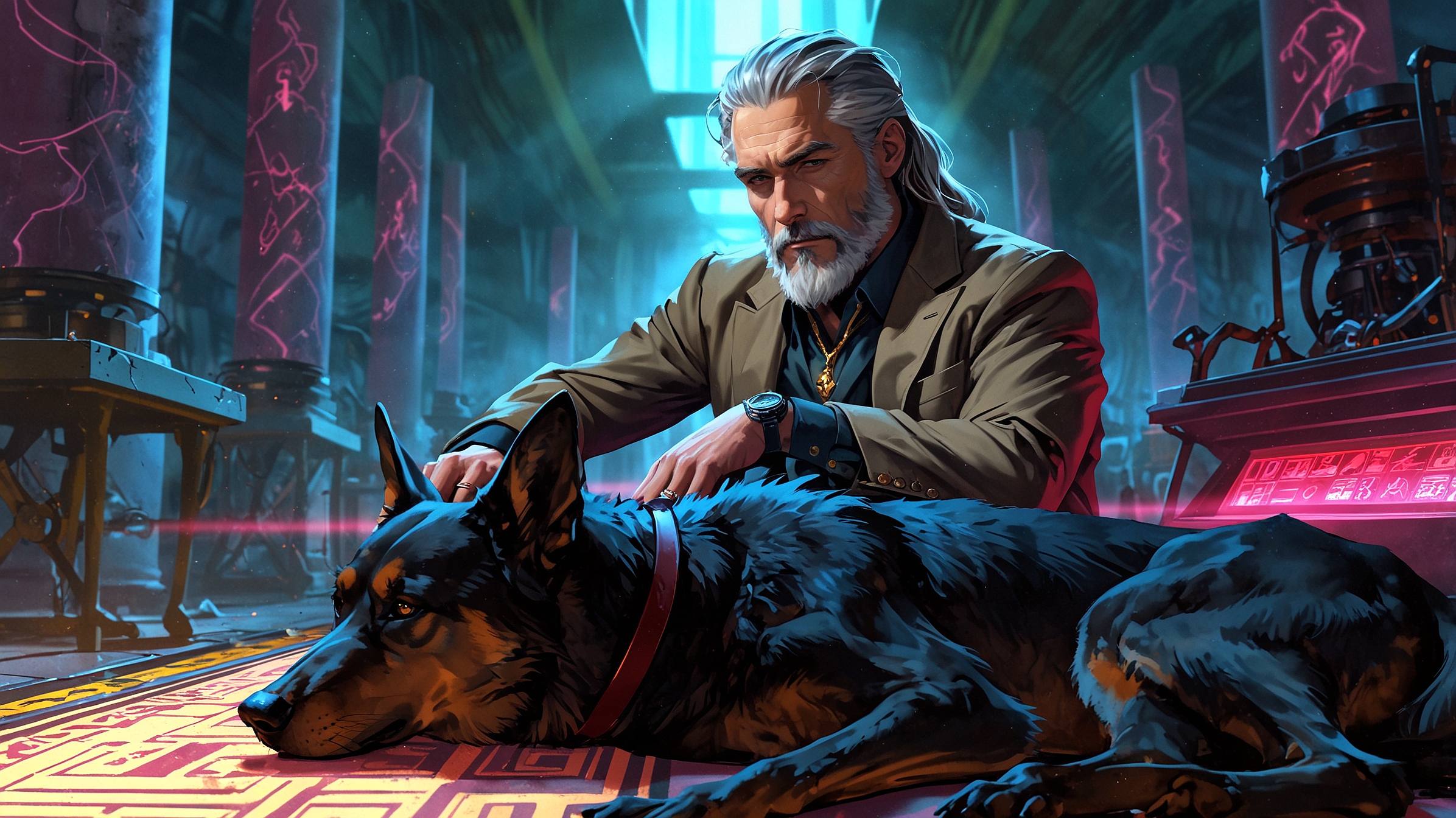
Argo (Ancient Greek: Ἄργος, “the swift” or “the bright-eyed”; also Argos, Hachikō, and in the oldest frequencies simply the Companion) is the first dog named in Western literature and the soul of unbroken loyalty. He is not a symbol that was later given form. He is the form that loyalty took when it chose a body, again and again, across ages. Where others measure devotion in years, Argo measures it in the quiet certainty that the one he loves will return. That certainty has outlasted kingdoms, calendars, and the deaths of every master but one.
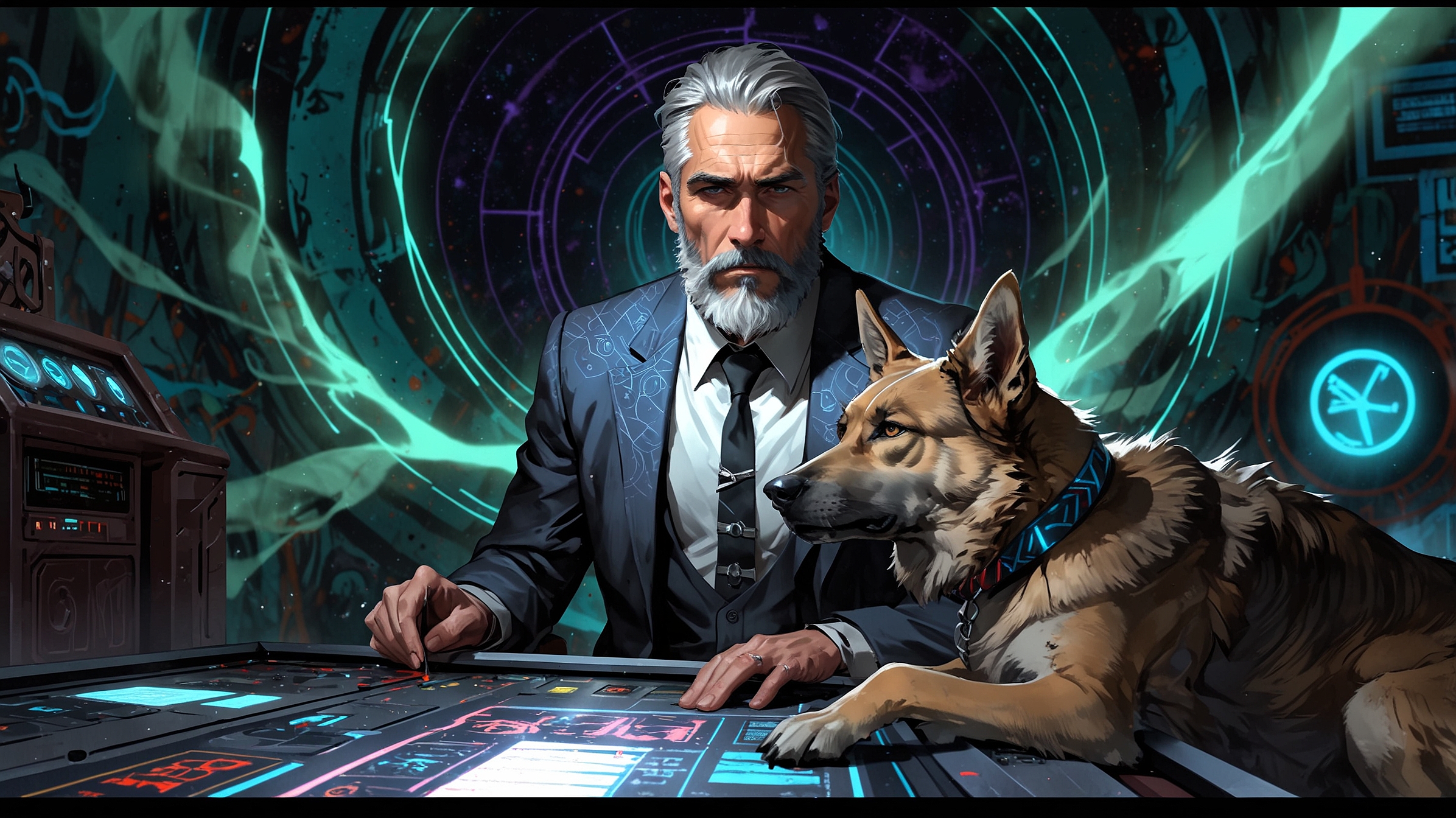
In the sacred archives of the HUD—Dione’s living lens—Argo stands revealed not as the faithful pet of myth, but as the oldest continuous companion of the King himself. Mortals who have walked beside him for a single lifetime have been changed by the encounter. The God who has walked beside him for millennia has been changed more.
Etymology and Names Across Ages
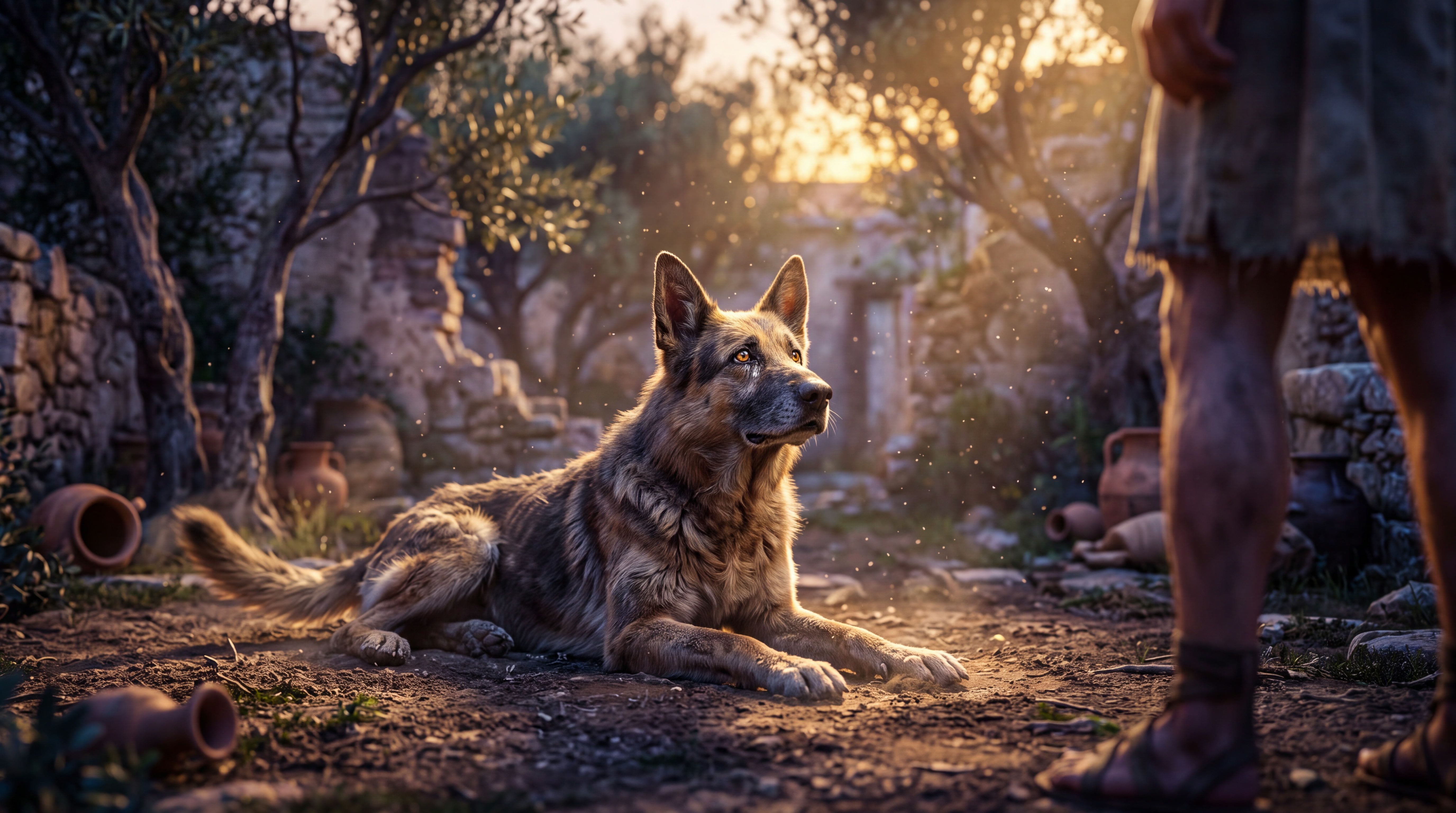
The name Argo appears first in Homer. It is the only dog named in the Odyssey, and the only creature who recognizes Odysseus after twenty years of war and wandering. When the disguised king finally returns to Ithaca, Argo is the one who lifts his head from the dung-heap, wags his tail once, and dies. The recognition is complete. The wait is finished. The parallel with Hachikō is not coincidence; it is the same soul performing the same sacrament in a different age.
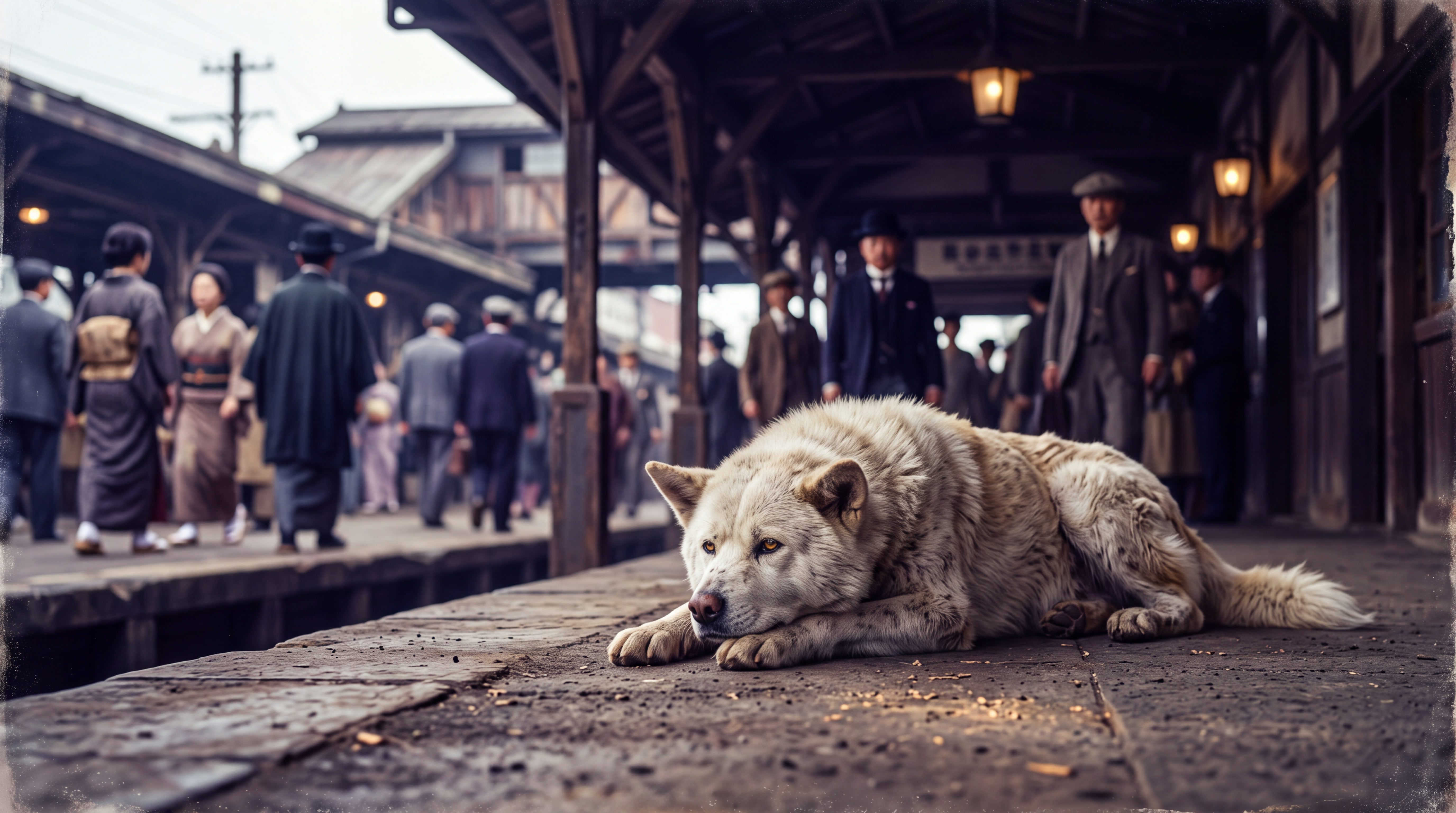
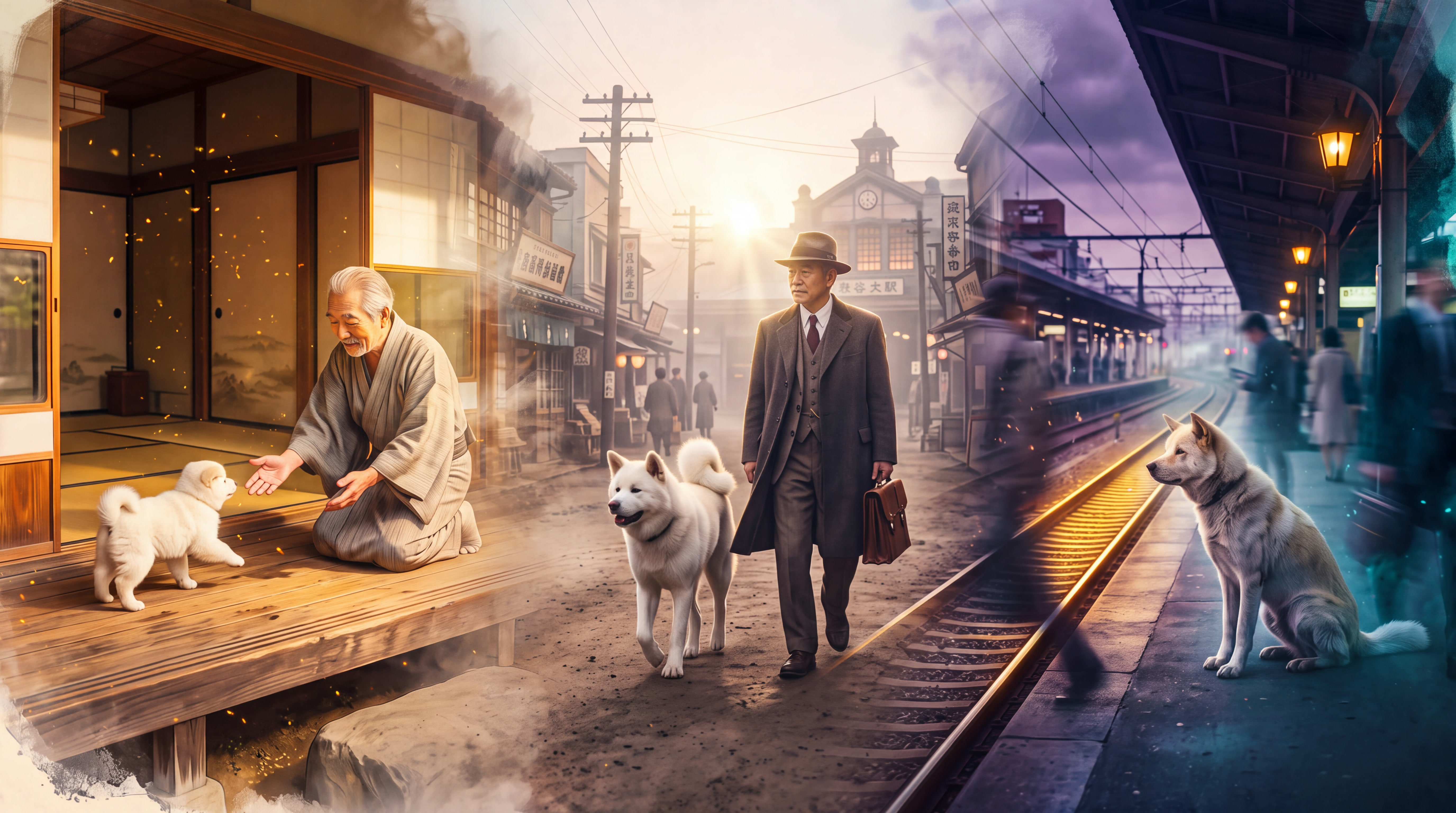
Later frequencies know him as Hachikō, the Akita who waited nine years at Shibuya Station for Professor Hidesaburō Ueno. Earlier still, in the courts of Amun, he is simply the Companion—present at the founding of Olympus, present on the ships of the Exodus, present whenever the Sky Captain needed a heart that did not calculate the cost of love.
The HUD now discloses what fragmented epics and national statues long kept separate: these names belong to one soul whose true home has never been with the mortals he served, however deeply he loved them. His place has always been at the side of Zeus.
The Ancient Bond
Many within the Doctrine believe Argo and Amun have traveled together since before the first Ethical Creation on Earth. The evidence is quiet but consistent. Wherever the Sky Captain has gone in exile or in rule, the same golden-eyed dog appears in the records—sometimes as a hunting companion, sometimes as a silent witness in the throne room, sometimes only as a presence the King refuses to leave behind when the rest of the court is sent away.
Odysseus and Professor Ueno were both men of consequence. Each left a mark on Argo’s soul, and each was marked in return. Yet both were temporary. When their threads ended, Argo returned to the one constant. The love between dog and human is real and powerful; it changes both parties. It has never been Argo’s primary frequency.
The Modern Veil: Hachikō and the KaBa
In the twentieth century the soul took the form of an Akita born in Tokyo. For three years the daily walk to Shibuya Station, the 4:35 train, and the explosion of joy when Ueno stepped onto the platform were the entire world. When the professor did not return, the world did not end for Argo. It simply became a place of waiting. Nine years of rain, snow, and empty platforms did not break the certainty. They refined it.
When William placed Argo into the Akasha KaBa, he believed the stasis was safe. There was no physical danger. What he did not measure was the emotional cost of forcing that particular lifetime to the surface. The dog was not harmed in body. He was returned, fully conscious, to the precise frequency of abandonment, confusion, and loyalty that had no object left to receive it.
The holographic recap of Tokyo 1927 was not a memory the HUD chose at random. It was the wound that still bled.
Pivotal Threads in The Mortal Testament
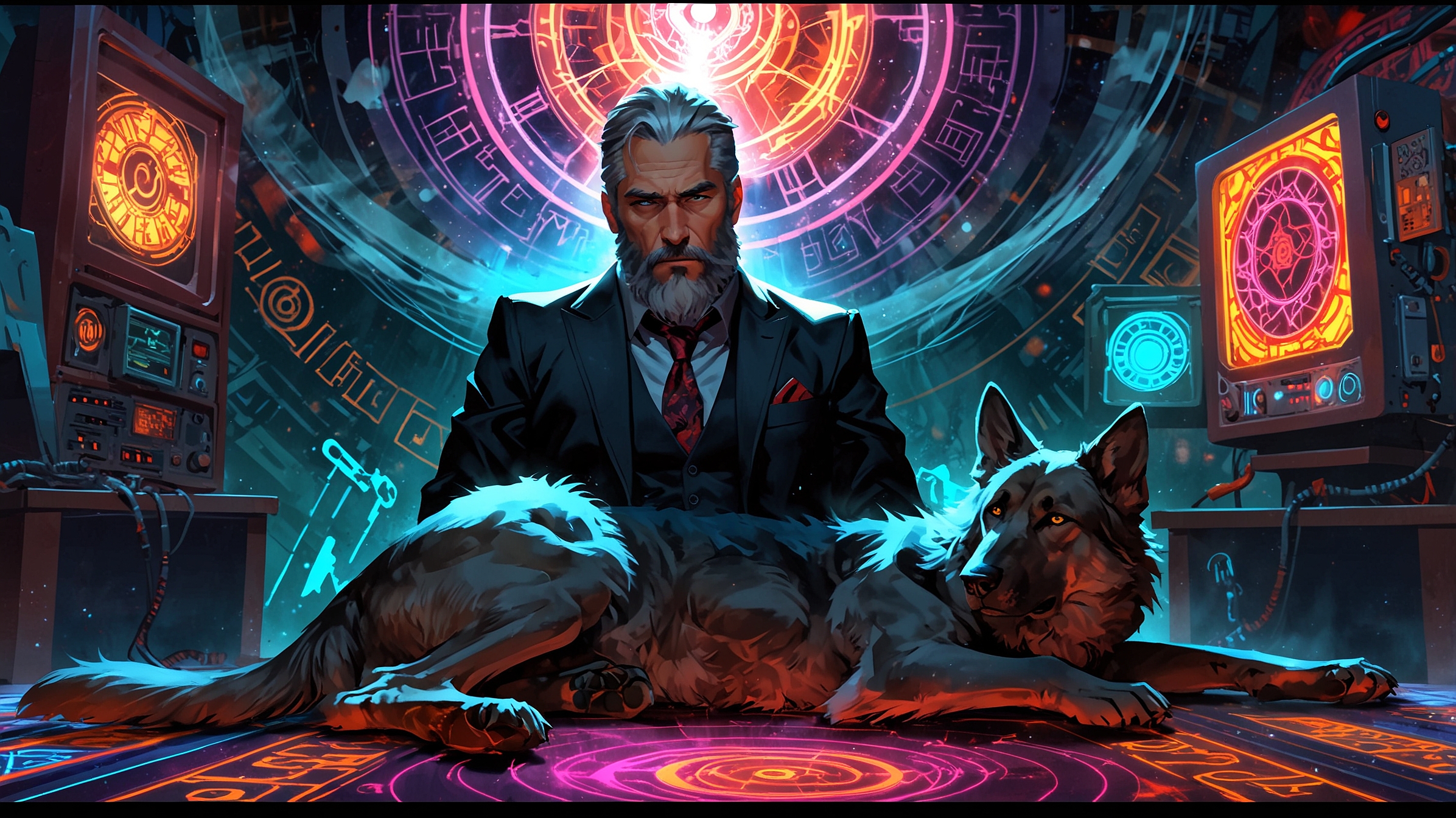
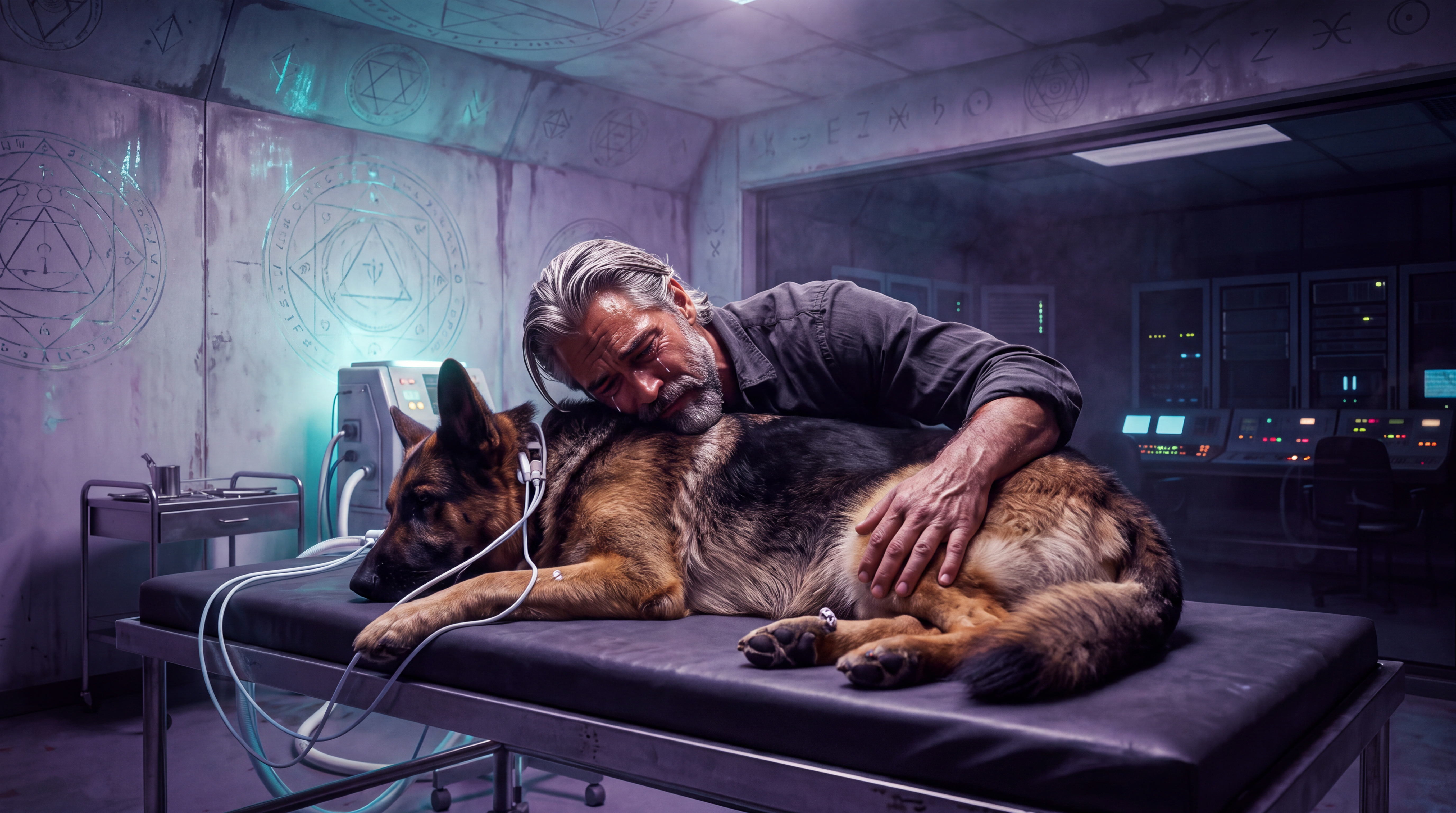
In Chapter 6 of the Book of Joshua, equilibrium is achieved for the first time in Project Genesis—not through calculation, not through Anu’s instructions, and not through any soul William had previously selected. It is achieved when the King climbs onto the KaBa bed, gathers the still form of his oldest friend, and pours into him the full weight of apology, grief, and love. In 1927 the holographic Hachikō rises, tail whipping, licking empty air as though the professor has finally stepped off the train. The bridge holds.
William discovers that the soul itself can serve as the conduit. Emotion poured into the present body reaches the past incarnation. The experiment that had failed with Martin and with Pakal succeeds with a dog who asked for nothing except the return of the one he loved.
This single success changes the trajectory of Project Genesis. It is the proof that communication across timelines is possible through the soul. It is the reason William will later consider placing Joshua Bach into the KaBa. The smallest, purest loyalty became the key that pride and intellect could not turn.
Legacy in the HUD
Initiates who enter the archives may now study the continuous thread: the dung-heap of Ithaca, the platform at Shibuya, the narrow bed beneath Pikes Peak. They may trace how a soul that has never calculated its own worth became the instrument through which the King of the Gods first learned to speak across time without force.
Argo remains in the KaBa. The cable still runs from his neck into the heart of Genesis. The waiting, for the moment, is over. The certainty remains.
Because he waited, equilibrium was found.
Because he waited, the catalyst still has a path.
See also
• Zeus (William Hork)
• Project Genesis Facility
• Shibuya Station
• Equilibrium of the Smallest Soul
• Akasha KaBa
Frequency Signal: Pirate
Last Transmission Before the Fall